These components power various military platforms, including aircraft, naval vessels, submarines, satellites, land vehicles, and handheld devices. High-performance electronics were—and remain—the core of modern defence and aerospace capabilities. They sit inside precision sensors that enable real-time intelligence and ensure secure data links. High-performance electronics are also essential in advanced power management to sustain critical operations. They are thus crucial to mission success and operational superiority.
Circular MIL-Spec Connectors
Military ground vehicles such as armoured mobility systems, APCs (Armored Personnel Carriers), and communication trucks use circular MIL-Spec connectors. This ensures reliable power and data connections during critical missions. These are used in-
- Tactical Communication Systems: Military radios, GPS units, and tactical networks use secure connections to link command centres with field forces.
- Power Distribution Units (PDUs): Military vehicles use distributed power networks to deploy defence systems, sensors, and computers. Circular connectors ensure stable power flow from batteries to critical electronics.
- Navigation & Targeting Systems: Circular connectors link GPS receivers, laser range finders, infrared cameras, and targeting pods, allowing precise positioning and engagement of high-risk targets.
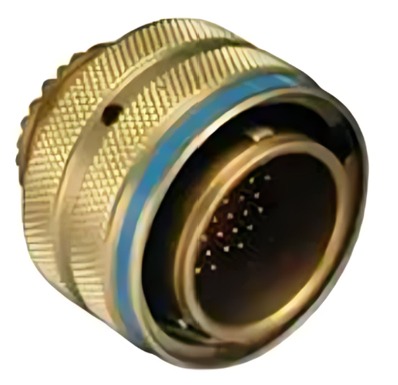
Figure 1: LJT06RT-21-35S-014-LC, Circular Connector, LJT Series, MIL-DTL-38999 Series I, Straight Plug, 79 Contacts
Military aircraft like jets, strategic aircraft, drones, and helicopters also use circular MIL-Spec connectors for secure avionics and advanced defense systems. These connectors resist vibration, electromagnetic interference, and extreme temperatures while staying lightweight for better aircraft performance. Key applications include:
- Flight Control & Avionics Systems: Connectors link cockpit instruments, flight computers, and air sensors to give pilots real-time flight data.
- Precision Strike and Control Systems: These connectors join radar systems, targeting pods, and guided system interfaces for accurate targeting.
- Engine & Power Systems: Special high-temperature connectors move power and data through jet engines, power units, and fuel systems.
All naval ships, submarines, and maritime defense systems rely on circular MIL-Spec connectors for secure data and power transmission in extreme marine conditions. Given the exposure to saltwater, moisture, and pressure differentials, these connectors feature corrosion-resistant materials (nickel-plated or stainless steel) and hermetic sealing to prevent ingress. These connectors are widely used in:
- Radar & Sonar Systems: To maintain effective maritime surveillance, onboard radars, sonar arrays, and acoustic sensors require corrosion-resistant and pressure-sealed connectors.
- Advanced Threat Response Systems: Integrated precision launch systems, underwater navigation & tracking systems, and deck-mounted defence stations depend on robust electrical connections to function effectively.
- Shipboard Power & Communication Networks: Submarines and surface ships use high-reliability connectors to maintain secure internal power grids and encrypted communication systems.
Similarly, space applications require circular MIL-Spec connectors that can handle vacuum, radiation, and extreme temperatures. These connectors use radiation-resistant materials and thermal-stable housings to stay light and durable in space. They serve these main functions:
- Satellite Communications: Securely link antennas, data processors, and relay stations to transmit high-frequency signals to ground stations.
- Power Distribution in Spacecraft: Connectors offer reliable power connections for various solar arrays, propulsion systems, and scientific payloads.
- Telemetry & Instrumentation: Circular connectors interface with temperature sensors, radiation monitors, and positioning systems, ensuring continuous data collection.
Rectangular MIL-Spec Connectors
For high-density connections in compact spaces, rectangular MIL-Spec connectors are widely used for high-speed data and power applications. They are commonly used in:
- Military Vehicles (Land): Control panels, robotic defence systems, and engine management units.
- Aircraft Avionics (Air): Flight control modules, navigation systems, and communications equipment.
- Naval Systems (Sea): Radar systems, sonar networks, and underwater navigation modules.
- Spacecraft (Space): Satellite control modules and deep-space exploration instruments.
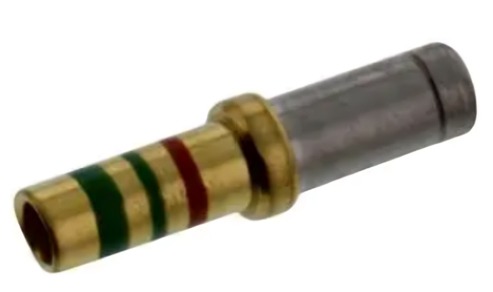
Figure 2: Rectangular connector 1662-213-2031. CONTSOCASSY DEUTSCH - TE CONNECTIVITY
Video 1: Solaris: Rectangular Connector
Fiber Optic MIL-Spec Connectors
Military forces use fiber optic connectors for secure, high-bandwidth data transmission in electromagnetically noisy environments. These are essential.
- Tactical Operations Networks (Land) – Enabling high-speed, encrypted communication between command centres and frontline units.
- Drones & UAVs (Air) – Supporting real-time transmission and remote piloting systems.
- Submarine Data Links (Sea) – Ensuring secure underwater data transmission for sonar and periscope systems.
- Satellite Laser Communication (Space) – Used in deep-space missions for optical data links.
Interconnects
Interconnect components are vital for reliable signal and power transmission in military vehicles, aircraft, naval systems, and satellite networks, where they face harsh conditions like high temperatures, electromagnetic interference (EMI), and mechanical stress. For military vehicles and battlefield electronics, interconnect solutions shield against EMI and ensure ruggedized connections. Aircraft depend on lightweight, high-performance interconnects that endure rapid temperature changes and high-altitude radiation. Naval and submarine systems require moisture-resistant, corrosion-proof interconnects for uninterrupted operation in harsh maritime environments. Spacecraft interconnects must withstand radiation, extreme temperatures, and mechanical stress during launch and spaceflight.
- Tactical Communication Systems: RF connectors provide secure data transmission in radio communication and radar networks.
- Power & Signal Cabling: High-temperature-resistant sleeving ensures critical wiring in combat vehicles and mobile command centres remains protected from heat and abrasion.
- Electronic Systems: EMI shielding prevents signal disruption and interference by electronic countermeasures.
- Avionics & Flight Control Systems: Hook-up wires and multicore cables provide secure signal routing in cockpit displays, flight control computers, and radar guidance systems.
- Strategic Response Platforms: RF connectors ensure uninterrupted high-frequency signal transmission in radar and precision navigation systems.
- Power Distribution Networks: High-temperature fibreglass sleeving protects onboard power systems from overheating and electrical failures.
- Underwater Sonar Systems: EMI shielding sleeves protect acoustic sensor cables from interference.
- Naval Power Distribution Panels: Hook-up wires and multicore cables ensure secure electrical connections for shipboard communications.
- Satellite Power Systems: Radiation-resistant cables provide secure connections for solar arrays and battery storage units.
- Deep-Space Communication Antennas: High-frequency RF connectors enable real-time data transmission between satellites and ground stations.
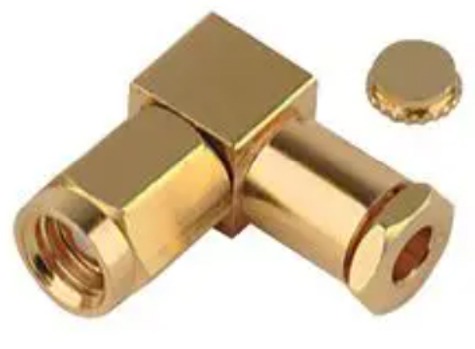
Figure 3: MP-26-06L-TGG, RF / Coaxial Connector, SMC Coaxial, Right Angle Plug, Solder, 50 ohms, RG174, Beryllium Copper
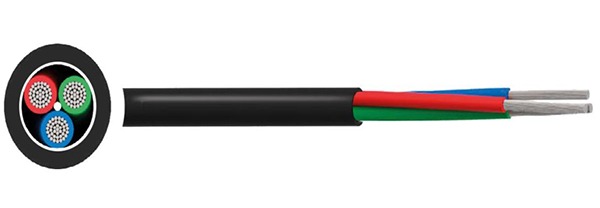
Figure 4: MP002360, Multicore Cable, 7-2-3C, Screened, 3 Core, 0.22 mm², 82 ft, 25 m
Video 2: Rugged, high performance compact interconnects from Cinch Connectivity Solutions
Power management & circuit protection
Military vehicles, mobile command posts, and operational electronics need strong power management solutions to operate reliably in harsh environments. Military aircraft face high altitudes and extreme temperature changes, requiring specialized power regulation for avionics, radar, and flight control systems. Naval ships demand high-power, corrosion-resistant components for defence systems, communication networks, and sonar operations. Spacecraft electronics must endure radiation exposure, vacuum conditions, and power fluctuations.
-
AC-DC/DC-DC Converters & Power Modules: These converters regulate power from onboard batteries and generators to sensitive electronics in armoured vehicles, communication systems, and drone power supplies. In avionics power distribution systems, they convert voltage for critical electronics in jets, strategic aircraft, and UAVs. Radiation-hardened DC-DC converters are essential for satellite communication transponders, propulsion systems, and onboard scientific instruments.
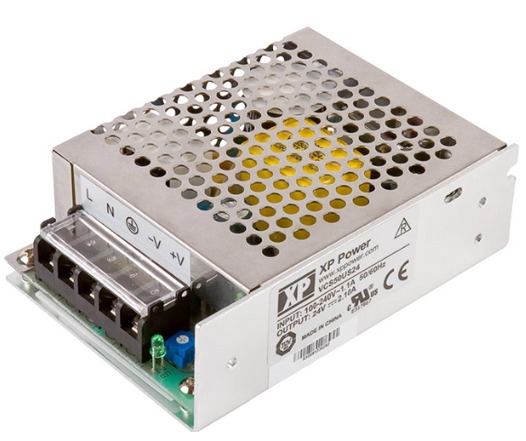
Figure 5: VCS100US24, AC/DC Enclosed Power Supply (PSU), ITE, 1 Output, 100 W, 24 VDC, 4.17 A
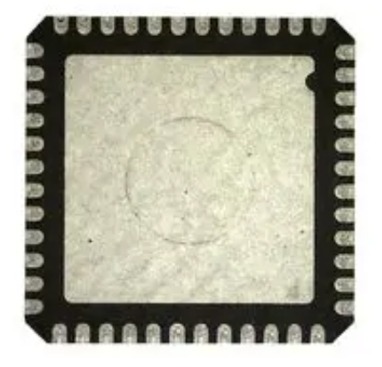
Figure 6: LTC2107IUK#PBF, Analogue to Digital Converter, 16 bit, 210 MSPS, Differential, Single Ended, 3 Wire, Serial, SPI
- Transient Voltage Suppressors (TVS) & Surge Protection: Military electronics are exposed to voltage spikes from Electromagnetic Pulses (EMPs) and power fluctuations. TVS diodes protect GPS units and onboard sensors from transient-induced damage.
- Power Factor Correction (PFC) Modules: They are essential for military radar systems to ensure stable voltage operation under fluctuating power conditions.
- Circuit Breakers & Fuses: Used in shipboard power distribution panels, protecting electrical systems from overcurrent faults.
- Battery Management Systems (BMS): These are integrated into submarines and unmanned Underwater Vehicles (UUVs) to ensure reliable backup power.
- Solar Array Power Regulators: These are essential for regulating power from solar panels to internal electronics and satellite energy harvesting.
Video 3: How Eaton's Power Defense Circuit Breakers Work - Workbench Wednesdays
Sensors & transducers
Advanced sensors are essential for military ground forces as they help in navigation, acquisition, and intelligence gathering. Sensors fitted to aircraft and guided projectiles help monitor objectives and stabilize flight. Submarines and naval vessels rely on advanced sonar and environmental sensors to detect threats and navigate underwater. These include-
- Inertial Measurement Units (IMUs): Provide positioning data for tanks, projectile launch systems, and autonomous ground robots.
- LIDAR Sensors: Used in drones and robotic reconnaissance vehicles for terrain analysis.
- Pressure Sensors: Monitor aircrafts' altitude, fuel flow, and cockpit pressurization.
- Infrared (IR) Sensors: Used for detection and tracking of unwanted objects and aircraft, and providing imagery for cockpit displays and pilot night vision.
- Hydrophones & Acoustic Sensors: Detect underwater movements, such as submarine movements and monitor air disturbances.
- Depth Sensors: Monitor ocean pressure changes for submarine maneuvering.
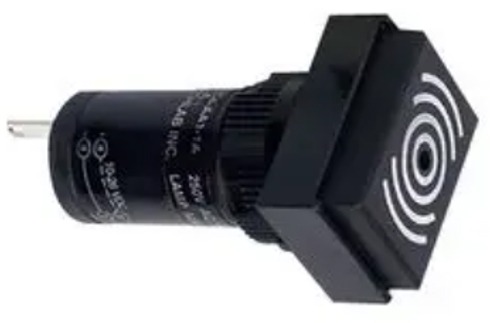
Figure 7: MPADP16B4-0T0-0240
Electromechanical components
Military vehicles require ruggedized electromechanical components to withstand harsh conditions, while aircraft need high-reliability electromechanical systems for smooth cockpit operations and effective surface control.
- Heavy-Duty Switches: Used for fire control panels and engine management.
- Military-Grade Relays: Control power to tactical communication units.
- High-Reliability Relays: Used in flight control actuators and emergency shutoff switches.
- Panel-Mount Buzzers & Indicators: Provide cockpit alerts and warnings.
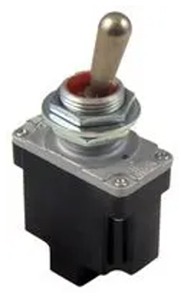
Figure 8: 1TL1-1, Toggle Switch, On-Off-On, SPDT, Non Illuminated, TL, Panel Mount, 20 A
Test & measurement equipment
Military and aerospace applications demand high-precision test and measurement tools to ensure electronic systems meet operational requirements. Key instruments include:
- Oscilloscopes & Signal Analyzers: Used to troubleshoot vehicle electronics, radar systems, and battlefield communication networks.
- Process Loop Calibrators: Ensure accurate calibration of pressure sensors and vehicle control circuits.
- Mixed Domain Oscilloscopes (MDOs): These are essential for testing and debugging complex systems such as radar and communication equipment.
- Vector Signal Generators: Provide RF test signals for radar and communication system calibration.
- Real-Time Spectrum Analyzers: Used in submarine sonar system diagnostics and satellite RF communication tests.
Conclusion
As a Global distributor in the sector “Farnell” provides a comprehensive selection of defence-grade components that meet military and aerospace standards, ensuring rapid global delivery for critical projects.
Featured categories












Technologies








Artificial Intelligence
One of the greatest revolutions in all of human history! AI is an all-encompassing concept that incorporates human intelligence into machines
DEVKIT HQ
The #1 Destination for Embedded Evaluation Boards, Development Kits, and Tools
IoT Sensor to Cloud Platform
/IOTCONNECT™ accelerate your loT journey with secure, ready-to-use cloud connectivity
Further Resources
Calculators & Conversion Charts
Selection Guides and Catalogues
Essential Learning Modules
Tech Spotlights
Design Resources
Engineering Glossary
Technical Support
Parts Finder Tools